

Shining a Light on Black Gospel Music
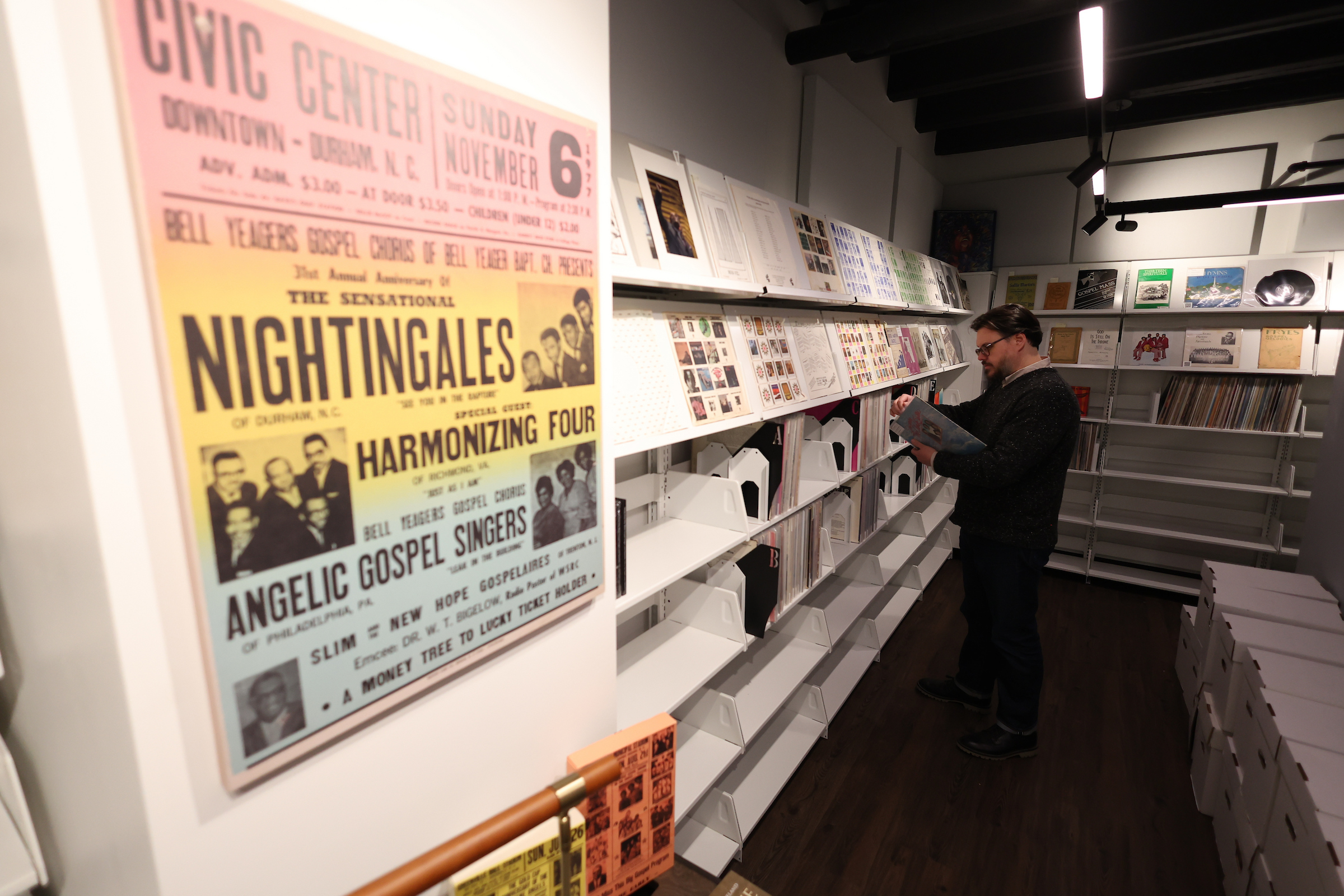
Baylor’s Black Gospel Music Preservation Project is drawing national media attention by expanding the ways it preserves and promotes decades of this historic music. The Black Gospel Music Preservation Program, an on-going 16-year undertaking has led to the digitization of thousands of vinyl records—45s and 78s rescued from basements, attics, and landfills.
In the past year, state media outlets such as Texas Highways and Texas Standard, as well as national media outlets CBS News and NPR, have highlighted the value and importance of the Preservation Project. CBS News highlighted the project’s mission to preserve not only the music but the legacies that laid the foundation for Black culture.
“I grew up in an era where the Black church was the epicenter of Black life,” said Stephen Newby, D.M.A and ambassador for the Black Gospel Music Preservation Program. “As we celebrate Black History Month and we’re thinking about the Black church, you can’t dismiss the music.” Newby also serves as the Lev H. Prichard III endowed chair in the Study of Black Worship in the Baylor School of Music.
This project was made possible by men and women with a zeal for preserving history. The rich and soulful sounds from the "Golden Age of Gospel", roughly 1945-1975, are distinctly African American. This fertile musical period in American history is a cultural snapshot revealing the depth of a people, their community, and the influence they have had on the rest of American music.
When Charles Royce came across Baylor professor of journalism Robert Darden's New York Times op-ed in 2005, he was impressed by the importance of preservation and by Professor Darden's passion. In turn, his gift to Baylor University created the Charles M. Royce Black Gospel Music Preservation Program.
In addition, the faithful support from Harold (BBA '51) and Dottie Riley of Austin continues to strengthen Baylor University's digitization efforts by equipping the Libraries with the Ray I. Riley Digitization Center, named in memory of Harold's father, and the Dottie S. Riley Conference Room. Their support has funded state-of-the-art equipment and facilities that allow the University to enhance preservation of such materials.
Visitors to Baylor can wear headphones and browse the collection at the physical archive in the basement of the Moody and Jones Libraries, or the public can access the database online and listen to thousands of old records widely available for the first time. The program has also partnered with the Smithsonian’s National Museum of African American History and Culture.
Once completed, this digital audio archive will draw researchers to Baylor University to listen to and research the "Golden Age of Gospel Music Archive." The ultimate goal of the project is to preserve and store a digital copy of the audio long term, and to provide standards-based discovery tools through an online interface into a full catalog of materials, along with samples of all tracks from the audio archive. Most importantly, this beautifully sweet, vibrantly alive music will be preserved so all can enjoy, love, and learn from it for generations to come.