

Preparing the Next Generation
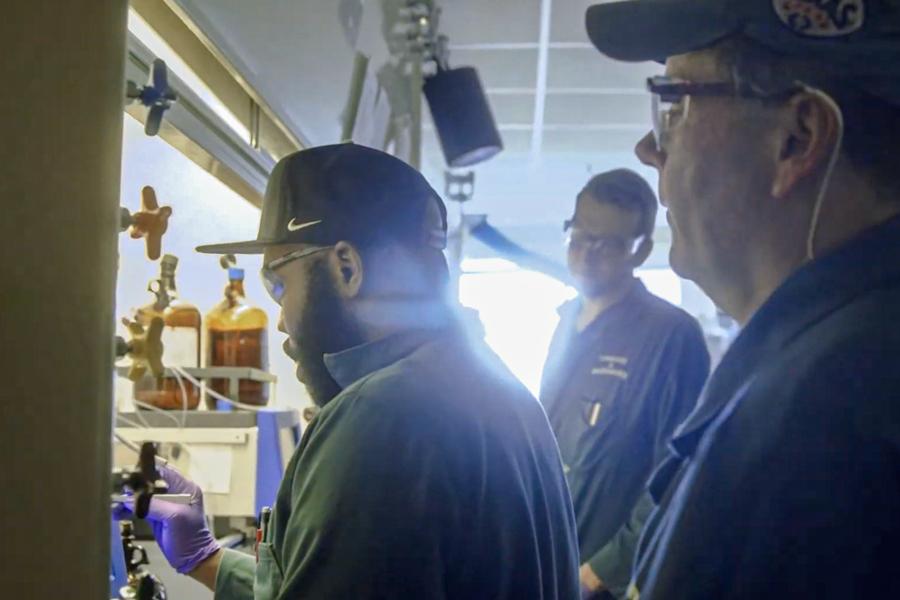
When junior Devin Guedry was a first-year student, he was literally invited into the research laboratory. His professor, nationally renowned cancer drug lead researcher Kevin Pinney, Ph.D., professor of chemistry and biochemistry, asked him and a friend if they wanted to tour the lab.
“We went in and looked around, and it was awesome,” Guedry remembers. “I could tell immediately it was a comforting, warm lab doing important work — it was somewhere I wanted to be.”
Now, Guedry is in there daily as a part of Pinney’s lab, an undergraduate working on his own projects alongside other undergraduates, graduate students and postdoctoral fellows. His experience captures Baylor’s distinct approach to undergraduate research. As one of just 19 universities ranked among U.S. News’ top 40 for both undergraduate teaching and research, Baylor has built a culture where cutting-edge discovery is embedded in the student experience. Long before they consider graduate school, undergraduates gain hands-on experience, personal faculty mentorship and opportunities to consider and tackle important questions.
Here are five ways Baylor is helping train the next generation of researchers:
Integration of Research and Teaching
At many research universities, students learn from faculty research indirectly. At Baylor, faculty regularly bring their research findings into the classroom, introducing students to emerging ideas, current issues in their field and real-world applications. As Baylor’s rankings signify, research and teaching are not separate lanes, but interconnected pathways for experiential learning.
Students Work Alongside World-Class Researchers
As Baylor’s R1 faculty conduct world-class research and earn elite national grants and awards, they remain accessible to students. Most of Baylor’s research faculty continue to teach undergraduate classes. This is not the case at many larger state schools.
“While mentoring students in a laboratory setting is precious and impactful, teaching in the classroom allows that impact to be multiplied and extended to many more students,” Lulin Jiang, Ph.D., associate professor of mechanical engineering, said. “Furthermore, integrating research into my teaching helps them see how classroom fundamentals are applied in practice.”
Immediate Opportunities
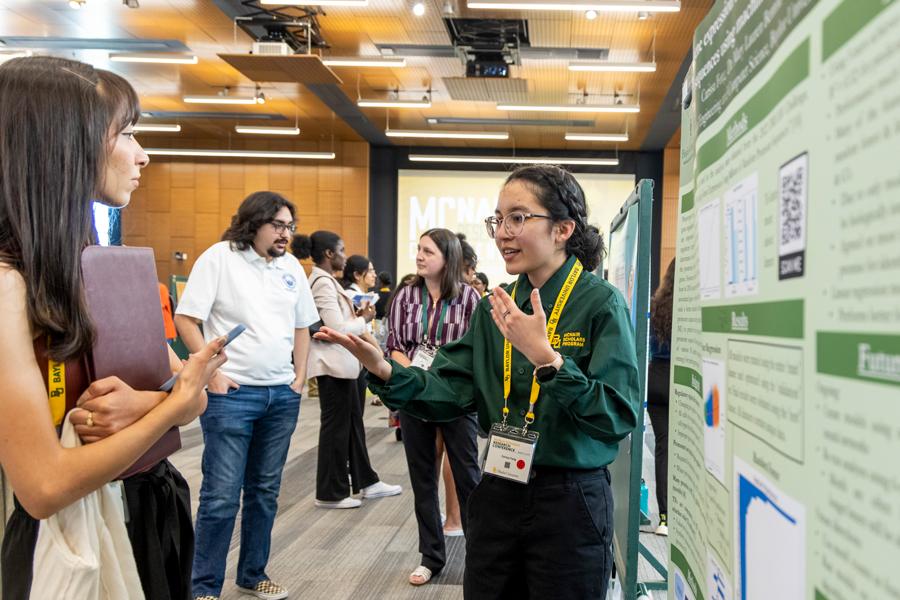
Research opportunities begin earlier than many students expect. Through the Office of Engaged Learning, undergraduates contribute to real projects, collaborate with mentors and present their work at major conferences or in industry publications. That posture invites students to take part and show what they are capable of contributing, rather than waiting years for their turn. Child and family studies junior Ava McWhorter, now in a leadership role in a lab, credits her journey to a professor who was simply “willing to let me get involved.”
Emerging Scholar Programs
Baylor programs such as Science Research Fellows, McNair Scholars and Hillis Scholars help students deepen their research experience through funding, mentorship and professional development. These opportunities specifically prepare students for future professional needs and obligations, in addition to research.
Elite Mentorship
The common thread running throughout Baylor research is mentorship. Faculty get to know their students and invest in them to become the next generation of leaders and problem-solvers.
“The best thing I can do is to try to instill a sense of curiosity, motivation and a drive to go after some of those tough questions,” Pinney says. “Baylor is part of a community of scholars that really cares about developing students, and I think we’re at the forefront of that discussion.”