

One Step at a Time
Anyone who has ever been to a pediatrician’s office with a child has been asked about developmental milestones. Is the baby laughing by about 6 months of age? By 2 years old, is your toddler walking and running? These developmental steps continue into adolescence and even extend into young adulthood as they shift more toward social, emotional and spiritual planes of self-awareness and discovery. In higher education, student development theory provides a framework for understanding how students grow academically, socially and emotionally during their college experience. And, at Baylor, that experience is approached with intentionality toward making space for self-discovery by helping students find their God-given purpose and calling while developing worldwide citizens and servant leaders.

For nearly a decade, Baylor University has annually been recognized in the upper echelons of U.S. News and World Report’s rankings for Best First-Year Experience. Programs like New Student Orientation, Baylor Line Camp, and Welcome Week and course offerings like New Student Experience classes and discipline-specific chapels are designed to help first-year students transition to and thrive in their college environment. Now, the University is adding more steps along the student development road to enhance the second-year student experience and create deeper connections to their created purpose.
Jarrett Fisher, Ed.D., is Baylor’s associate vice president for student life and dean of students. He says that Baylor’s recognition for its first-year experience is a significant foundation from which to build the next level of student development offerings.
“It’s fairly common at a lot of schools for students to encounter what’s known nationally in higher education as a sophomore slump or even a sophomore cliff after having received so much attention during their first year,” Fisher said. “Because our first-year student experience is second to none when it comes to finding community, we knew we wanted to continue that positive growth trajectory into the second-year experience and focus more on purpose and calling,” Fisher added.
Recognizing that all students have different needs, Fisher is careful not to prescribe a specific benchmark for all students during each year of the college experience. He does say, however, that there are general steps along the four-year trajectory that are significant. The first year is about overcoming fears, orienting oneself to a new environment and finding connection and community. The second year becomes pivotal for exploring various academic interests, committing to a major and discerning how that course of study could inform your future.
“There’s an adage: We should prepare our child for the road and not the road for the child. So, we need to think about how and when we launch students into that next stage of development in college. We are allowing them to really explore their God-given talents. And that’s not always possible in middle school years and high school years or even during their first year of college when everything is new. But Baylor students in their second year get to have really meaningful, in-depth conversations and experiences that lead them to trust how God is tugging on their heartstrings and calling them into who He created them to be,” Fisher said.
To that end, the Student Life team has cultivated events and experiences specifically designed with second-year development in mind. From connecting students with faculty mentors to events like Cap It Off, an end of first-year celebration where students reflect on the past year and ideate about the year ahead as sophomores, and Stories of Purpose Dinner, which focuses on second-year students confirming their major, there are touchstones throughout the second-year experience to set students up for success.
“Through this ‘Year2@Baylor’ programming, we’re creating these curated moments and an engagement plan. We’re not directing for students what they must do but rather offering a full range of experiences. We’ve created opportunities to interact with faculty, staff and alumni and partnered with areas across the University like the Career Center and Living & Learning Communities. At each touchpoint, we ask what second-year students need through those encounters, how what we do connects with Baylor’s mission and vision and our core pillars around what God has called us to do and how we can contribute to the student experience,” Fisher said.
Research to Results
Not only is Baylor’s approach to cultivating a student experience mission-centric and rooted in the University’s Christian identity, it’s also research based. According to Associate Professor of Higher Education and Student Affairs and Associate Vice Provost for Undergraduate Success Rishi Sriram, B.A. ’01, M.S.Ed. ’03, Ph.D., studies in college student development reveal that students have a markedly different sense of self between their freshman and sophomore years.
“The research shows that first-year students are trying to hold on to their old selves, their old habits, their old ways of viewing the world as much as possible because they’re in a new place and they’re often scared. That fear manifests as push back against growth,” Sriram says. “But after that first year, when they come back as second-year students, they are much more open to changing their ways of thinking, changing their ways of viewing the world, changing who they are and appreciating the changes along the way.”
As a result, the second year then becomes a prime opportunity for Baylor to speak into what students believe about themselves and help them discover how they view the world and their place in it. Sriram notes that the change students experience isn’t about abandoning the values and beliefs they were raised with but more about embracing the opportunity to take Christ-centered agency for their own lives.
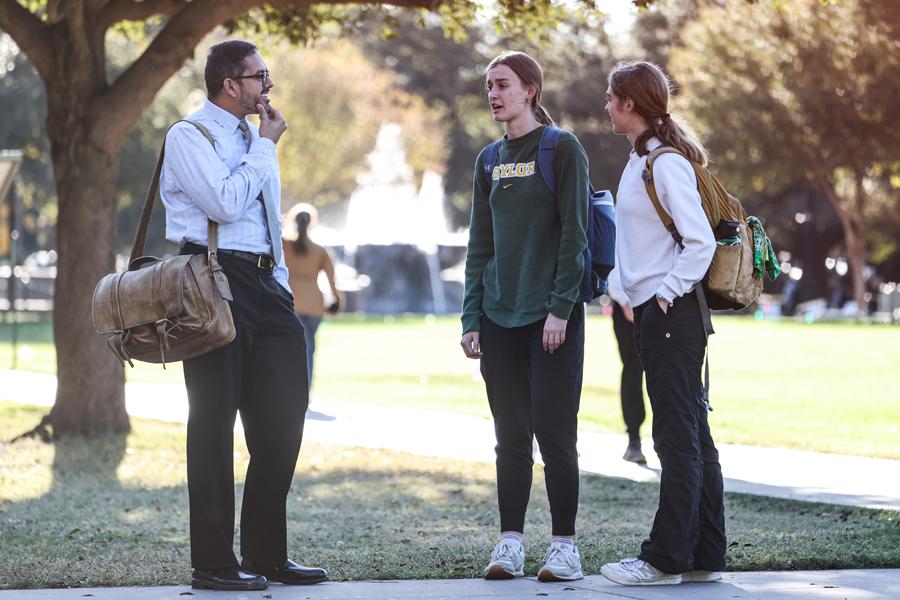
“The second year really becomes a time when students can start to take ownership and responsibility for their values and beliefs without solely relying on external factors such as family. Family will always be a part of who we are and how we think and what we believe, but, at some point, we have to take the next step and take ownership and authorship of our lives. In fact, self-authorship is a key term in the study of higher education and student development.”
Stories of Purpose
Oyinda Idowu, a neuroscience major in the honors program, is classified as a junior but is in her second year at Baylor. As a high school student in North Carolina, her criteria during her college search included a school with strong academics, D1 athletics, an emphasis on Christian community and academic support programs for her ambitious academic interests. As a first-year student, Idowu knew what she wanted to study and had a good sense of the communities she wanted to join but didn’t have a clear plan for what those decisions meant for her future.
“I’ve struggled with questions about what I hope to do with a neuroscience degree when I graduate, and I started to panic a little bit in my sophomore year, not knowing for certain where I’m going to go after college,” Idowu said.
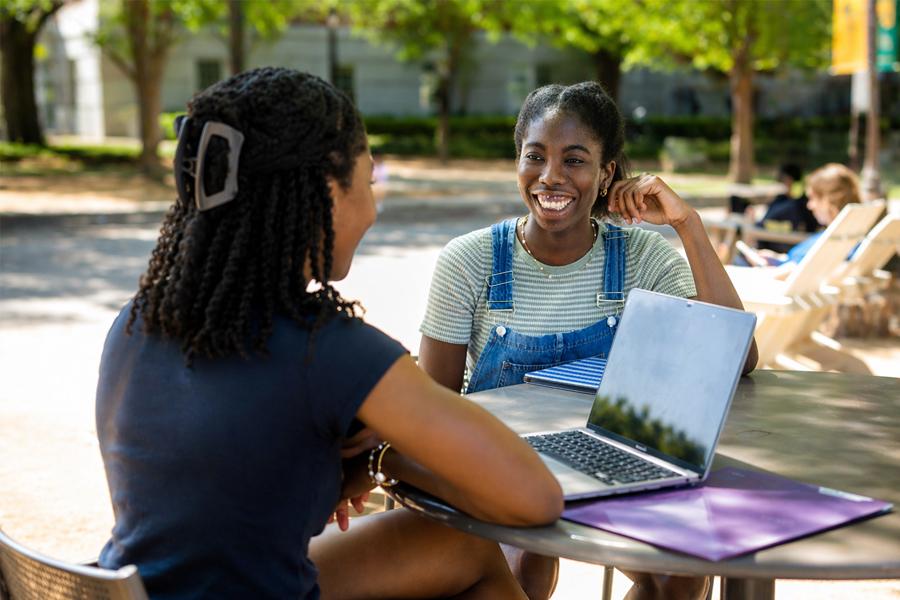
To seek out answers to her questions, Idowu boldly leaned into the robust community she found at Baylor. She consciously connected with professors who shared their own stories of questioning their path and finding success by pursuing subjects they love. Through her church, she found a mentor in an upper-level student who meets with her weekly to help with time management and spiritual accountability. She ventured out of her comfort zone and became a campus visits tour guide and a Baylor Line Camp leader. And, perhaps most importantly, she embraced the opportunities and programs within the second-year experience, including the Stories of Purpose Dinner.
“I felt a sense of renewed focus and energy after going to the Stories of Purpose Dinner and hearing the speaker’s story,” Idowu said of speaker Omari Head, M.Div. ’12, who is now owner and chief purpose officer at Pop’s Lemonade. “Omari talked a lot about how you might not always know what’s coming next, but how we can leave that in God’s hands. His journey from seminary to eventually opening a business years after college and finding purpose and ministry in that venture was encouraging. It gave me peace that God has everything in control and I just need to keep taking life one step at a time.”
Now as she heads into her third year at Baylor, Idowu is stepping into roles that pour into younger students as she confidently plans for her future as a graduate student to continue studying how the brain works and how that affects learning. As she reflects on her second-year experience, she says she’s grown in a lot of significant ways.
“Before coming to college, I kind of had some pride or some self-sufficiency where I wanted to figure everything out on my own. Now I’ve learned that it’s okay to ask for help, to seek out people who have gone before me and get advice from them on my plans. Through my experiences and relationships at Baylor, I’ve learned to put less identity on outcomes or what I thought my life should be and more identity in who God has made me to be and in His purposes over my life.”
In the end, according to Fisher and Sriram, that self-discovery and reliance on God that Idowu asserts is exactly what Baylor would hope for all its second-year students.