

3 Ways Baylor Researchers Promote Gut and Microbiome Health
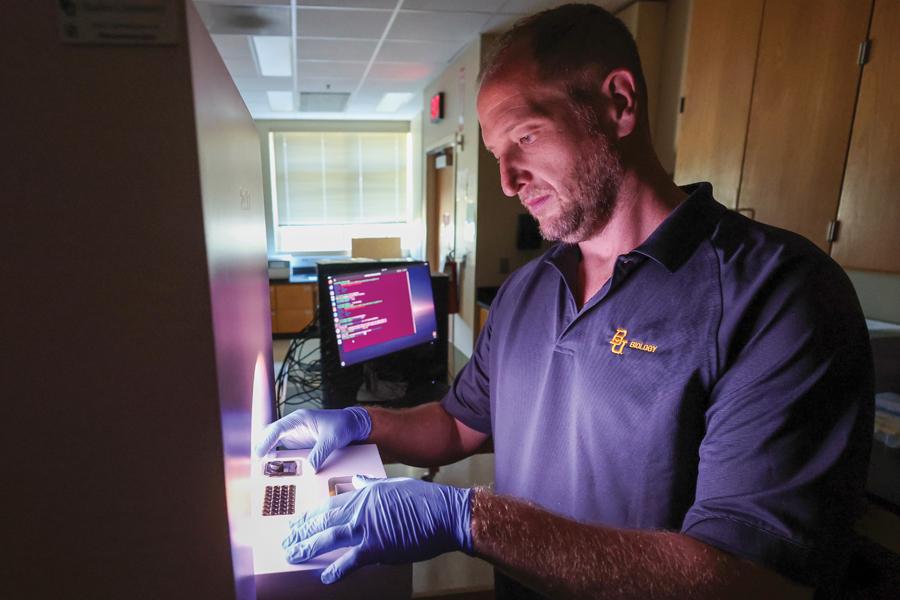
Inside every human body are trillions of bacteria, viruses, fungi and more. It’s not a pretty image for most people, but it’s not all bad — everyone has a collection of both healthy and unhealthy microorganisms. These microscopic guests play an oversized role in human health, making them a challenging but important field of study for researchers.
The microorganisms reside in a person’s microbiome — a collection of microorganisms found throughout the body in areas such as the gastrointestinal (GI) tract. Baylor’s strength in the field of microbiome research is rapidly growing, promoting ways to help humans enjoy healthier guts, which in turn promotes healthier people.
Here are three ways Baylor researchers are making an impact:
Vitamin D, the Gut and Cancer
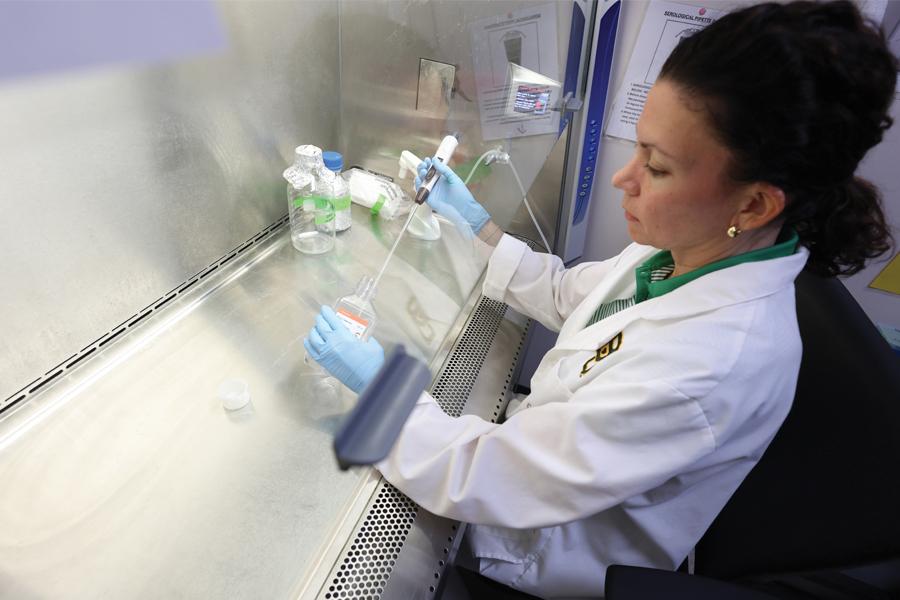
Leigh Greathouse, Ph.D., associate professor of nutrition sciences and affiliate professor of biology, focuses her research on the interplay between diet and treatment for cancer and other diseases. The gut microbiome factors significantly into her work as she probes the microorganisms for clues and markers for disease treatment and prevention. She’s currently at work on the connection between vitamin D and colorectal cancer prevention. Early-onset colorectal cancer is on the rise, and vitamin D has been linked to risk reduction. Greathouse is working to understand why vitamin D is protective and identify beneficial microbes for cancer prevention — research which could someday lead to new probiotic-enhanced, food-based treatments, especially for individuals who are vitamin D-deficient.
Stable Gut Bacteria and Healthy Childhood Growth
Jake Minich, Ph.D., assistant professor of biology, recently published a novel approach for capturing the complete genome of gut microbiomes, providing previously unavailable insights into the ways bacteria can impact childhood growth. Minich, who seeks to combat child undernutrition through his research, followed children in Malawi for nearly a year, recovering nearly 1,000 complete bacterial genomes from their gut microbiomes. The children were part of a longitudinal cohort who received dietary interventions from a clinical trial led by Washington University in St. Louis. Minich and his team found a link between gut genome stability and healthy childhood growth. Children who grew steadily maintained stable bacterial populations; children with slower growth had gut bacteria that shifted over time. His work indicates that the gut microbiome could be predictive of which children are at risk for undernutrition, a global health challenge impacting 25% of children under the age of 5 around the world.
Personalized Treatment for Gut Diseases
Aaron Wright, Ph.D., The Schofield Endowed Chair in Biomedical Science, is working to break through one-size-fits-all approaches to diseases like Crohn’s, Irritable Bowel Syndrome, Ulcerative Colitis and more. Just as each person is different, their gut microbiomes are distinct based on diet and other factors, meaning treatments for these diseases can vary in effectiveness based on the interplay between an individual’s unique gut and the medicine. Wright is part of a $5.6 million National Institutes of Health research team, in partnership with Weill Cornell Medicine, collaborating to build revolutionary, personalized treatments for the gut microbiome designed for an individual’s unique needs.
These are just a few of the projects these researchers are pursuing. As Baylor has invested in their work, the University has added state-of-the-art equipment to advance their research.
“I’m really excited about building our team together,” Greathouse said, “because it means that not only will we improve our science together, but all of our synergy is coming from different backgrounds. We can really build phenomenal teams to do even more meaningful work.”