

Look Back: Getting Scientific
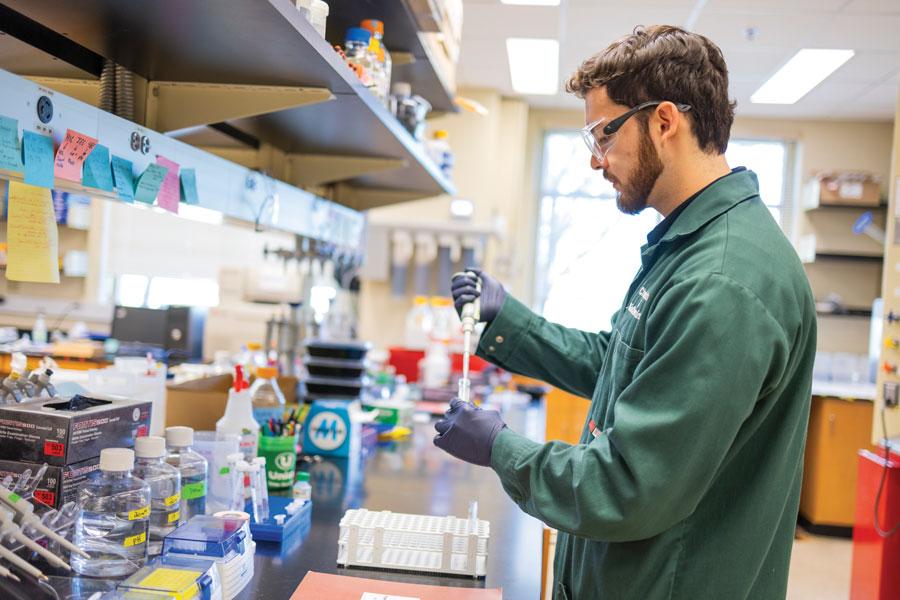
Baylor University has long been known for its success in preparing students for accomplished careers in the sciences. Such headline-making alumni have included the likes of Gordon Teal, one of the most influential American scientists of the 20th century. And in recent decades, scientists on Baylor’s faculty — who often involve undergraduate and graduate students in their work — have been responsible for such award-winning research projects as using earth-abundant metals like zirconium to create new tools for chemical synthesis and drug discovery.
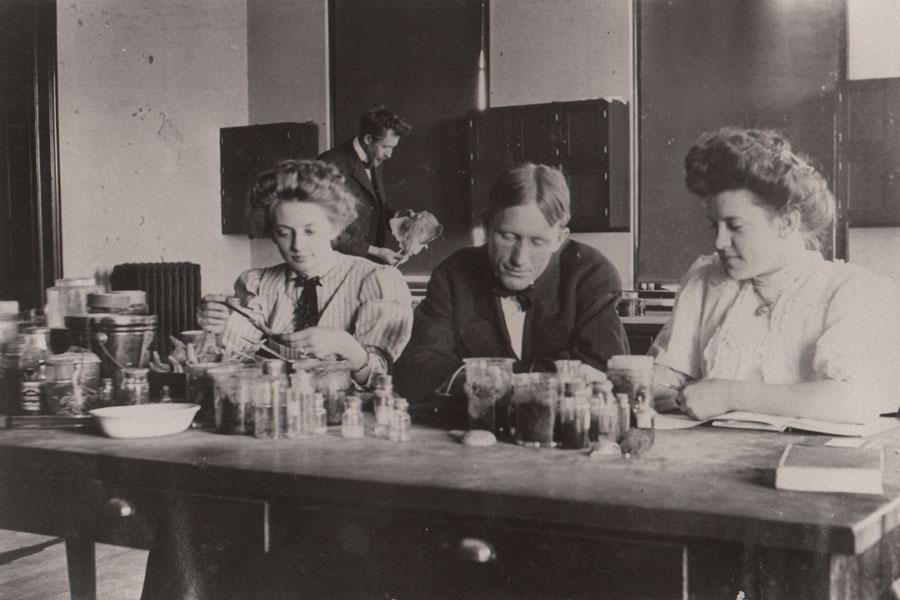
This tradition of excellence in scientific instruction and research goes all the way back to 1851, only a few years after Baylor was chartered by the Republic of Texas.
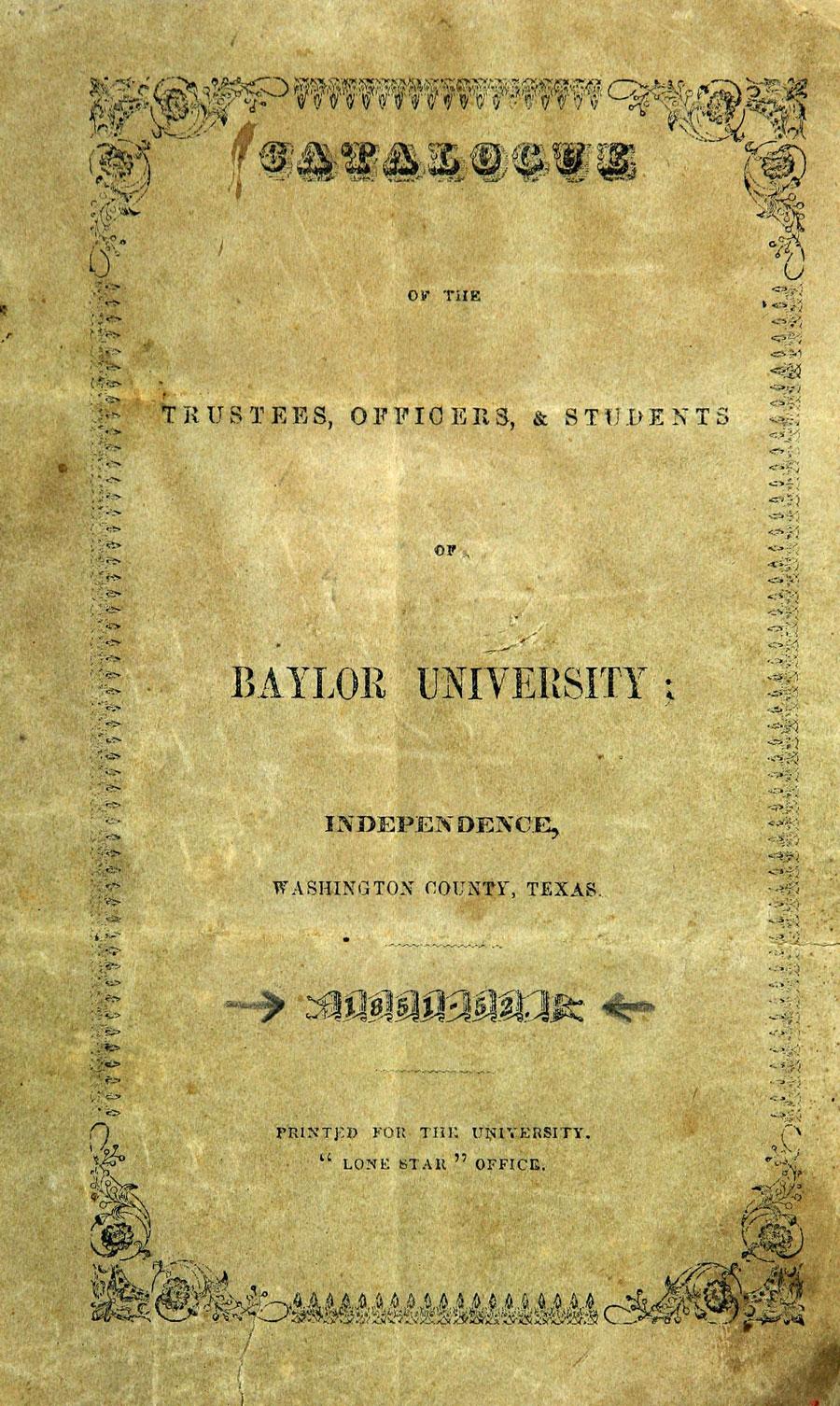
That’s when the University, then located on its original campus in Independence, Texas, acquired what was described at the time as a “set of philosophical and chemical apparatus.” James Huckins, one of Baylor’s co-founders, had purchased the equipment in Boston during the course of his tireless work as Baylor’s fundraising agent and then shipped it to Texas in the spring of 1851.
During that June’s commencement exercises, this equipment — which was the first of its kind in Texas, according to former University Historian Eugene W. Baker — was assembled and used to perform several scientific demonstrations before Baylor’s approximately 100 students and special guests. The 1851-52 Baylor catalogue subsequently noted, “The University is supplied with a good Apparatus for Philosophical experiments, embracing all needful instruments for illustrating the course of Optics, Mechanics, Electricity, &c.”
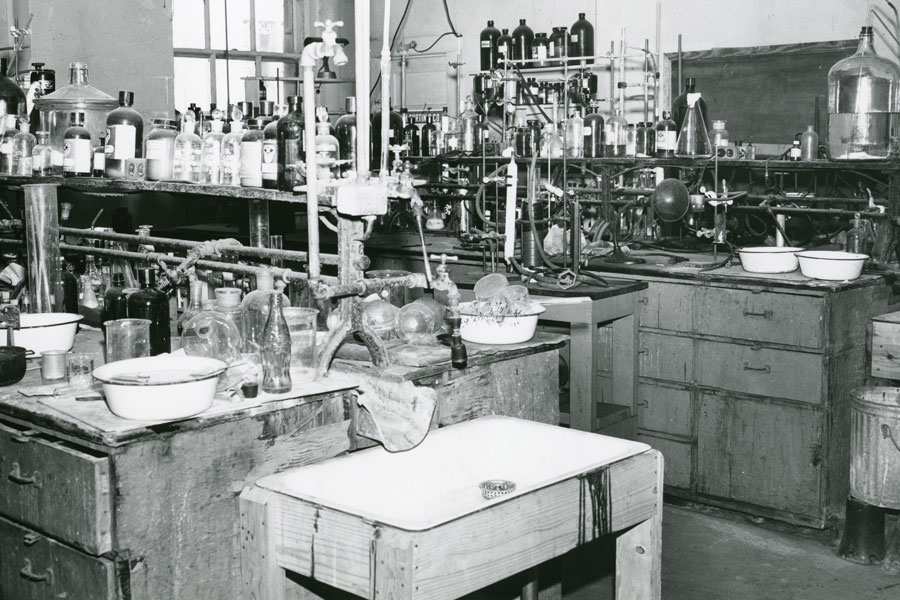
By 1859, the University’s enrollment had grown to about 350 students across the male and female departments, and that year scientific equipment worth about $1,600 was added to student laboratories — likely the first biology and chemistry lab in Texas. Such forward-thinking growth was characteristic of Baylor’s early years, during which the University quickly set out to establish disciplines and educational opportunities new to the region.
That first shipment of scientific equipment in 1851 represented an investment that has now grown countless times over. Today, as one of just over 50 private R1 institutions nationally, Baylor is recognized as a preeminent Christian research university and as a leader in health research and training, bolstered by nationally recognized laboratories across campus and supported by such facilities as the Baylor Sciences Building.
As both the past and present make clear, when it comes to pioneering education and ground-breaking research, Baylor University has always been on the cutting edge.