

A Look Back: Bears on Parade
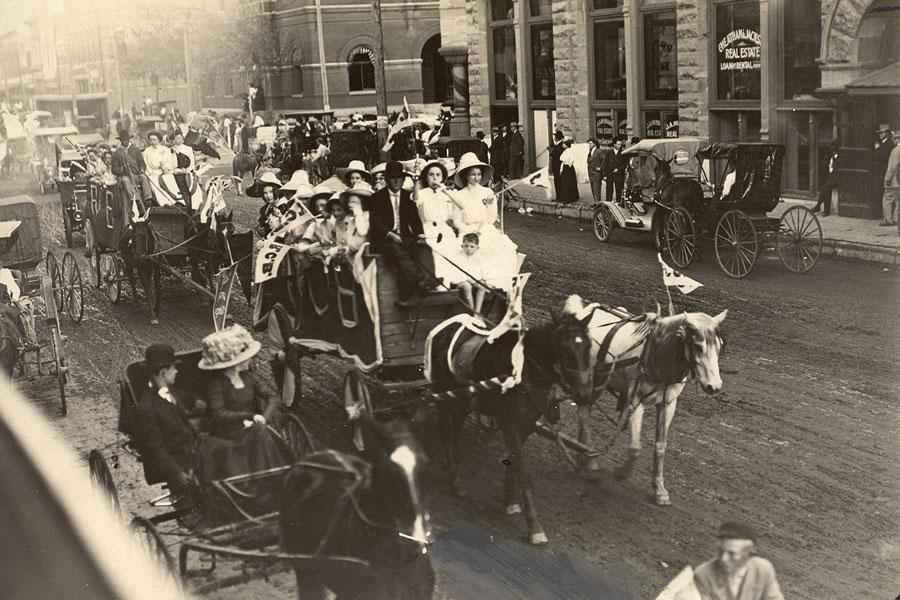
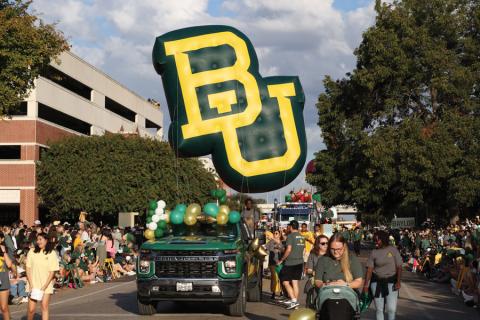
When the Baylor Family gathers bright and early on Saturday, November 1, for this year’s Homecoming parade, they will be continuing a fun tradition that goes all the way back to 1909. And along with enjoying the sights and sounds of colorful floats and cheering groups, they can take pride in the fact that Baylor hosts the oldest and largest collegiate homecoming parade in the country.
Although other schools like the University of Missouri, the University of Illinois and Southwestern University have at times claimed to be the originator of the homecoming tradition on college campuses, their inaugural events either occurred a year or two after Baylor’s first Homecoming or lacked a football game and parade. That makes Baylor the first college or university to hold a recognizably modern homecoming, with a bonfire, pep rally, parade and football game.
According to the invitation sent to alumni, the purpose of Baylor’s first Homecoming was “to give an opportunity for the joyful meeting of former student friends, an occasion when old classmates could again feel the warm hand-clasp of their fellows, recall old memories and associations and catch the Baylor spirit again.”
The festivities began on Wednesday, November 24, 1909, with a band concert at
3 p.m. followed by a reception hosted by Baylor President Samuel Palmer Brooks. The day’s events concluded with a bonfire and pep rally, a large alumni meeting in Carroll Chapel and an “old time soirée” in Burleson Hall.
Throughout the years, a few constants have played central roles in Baylor’s Homecoming parade tradition — warm fellowship, school pride and support of Baylor’s mission.
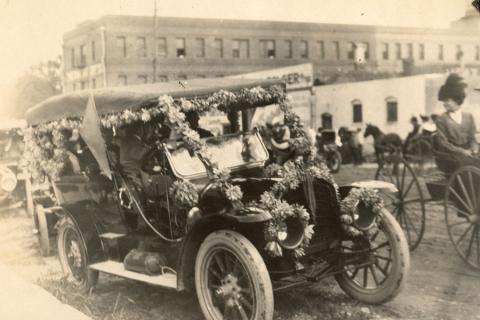
On Thursday, Thanksgiving Day, class reunions began at 9 a.m. A few hours later, Baylor launched its inaugural Homecoming parade from the corner of 11th Street and Washington Avenue. At the front, the Baylor Band was led by its towering drum major, who, it was reported, stood “six feet six in his stocking feet and without his bearskin cap.” Parade entries numbered well over 130, with dozens of automobiles and carriages, plus student organizations on foot. The vehicles, as noted by the 1910 Round Up, were “tastefully decorated with green and gold bunting and pennants; some automobiles were even profusely ornamented with yellow chrysanthemums.”
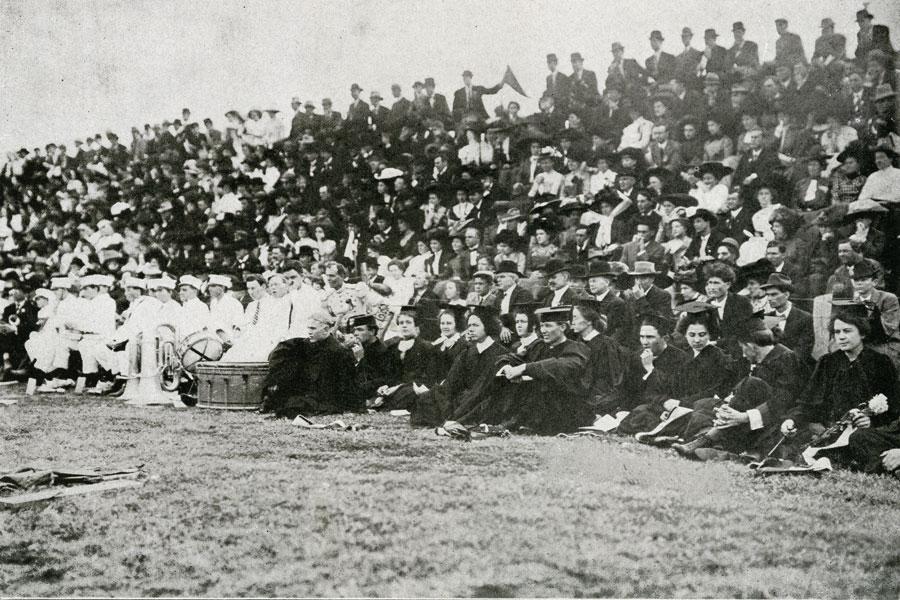
That afternoon, nearly 5,000 people packed the stands of Carroll Field — with Baylor seniors donning their caps and gowns — to watch the Bears defeat then-crosstown rival Texas Christian University on the football field by a score of 6-3.
Homecoming wasn’t held again until 1915, and subsequent reunions were only staged sporadically during June commencement week until Homecoming was formally established as an annual fall event in 1924, with Texas A&M replacing TCU as the Bears’ opponent on the gridiron. Notably, a few years during World War II saw a temporary suspension of Homecoming.
Like any tradition, Baylor’s Homecoming parade has evolved over the decades. During the 1920s, students supplemented it with torchlit pedestrian parades from campus to downtown Waco the night before the football game. In 1935, the big Saturday morning parade featured numerous floats for the first time, with 24 entries from Baylor organizations and classes competing for prizes offered by the Baylor Chamber of Commerce.
Throughout the years, a few constants have played central roles in Baylor’s Homecoming parade tradition — warm fellowship, school pride and support of Baylor’s mission. As such, the parade offers an opportunity for the Baylor Family around the world to celebrate what makes Baylor University special.
Watch the livestream of this year’s parade at baylor.edu/homecomingparade.