

Dedication of the Memorial to Enslaved Persons
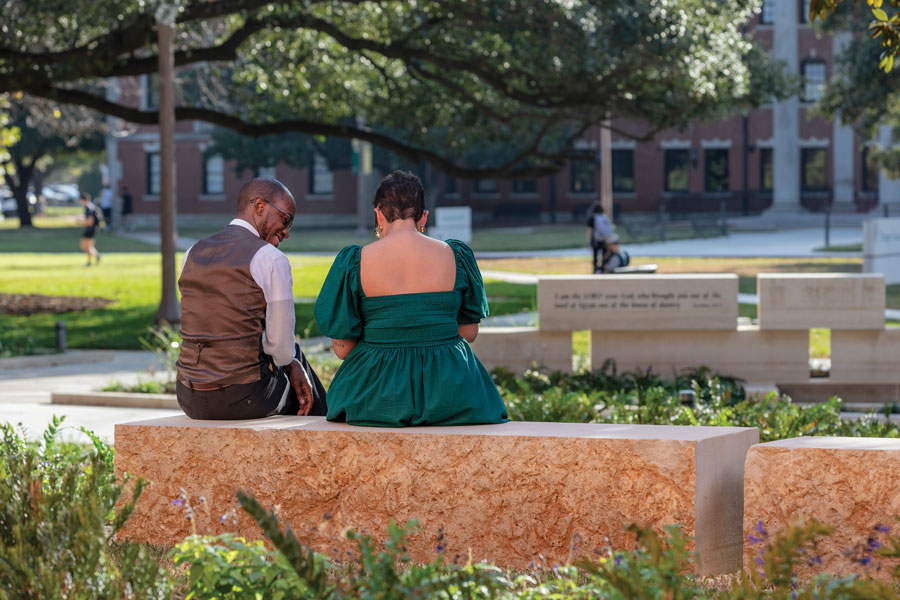
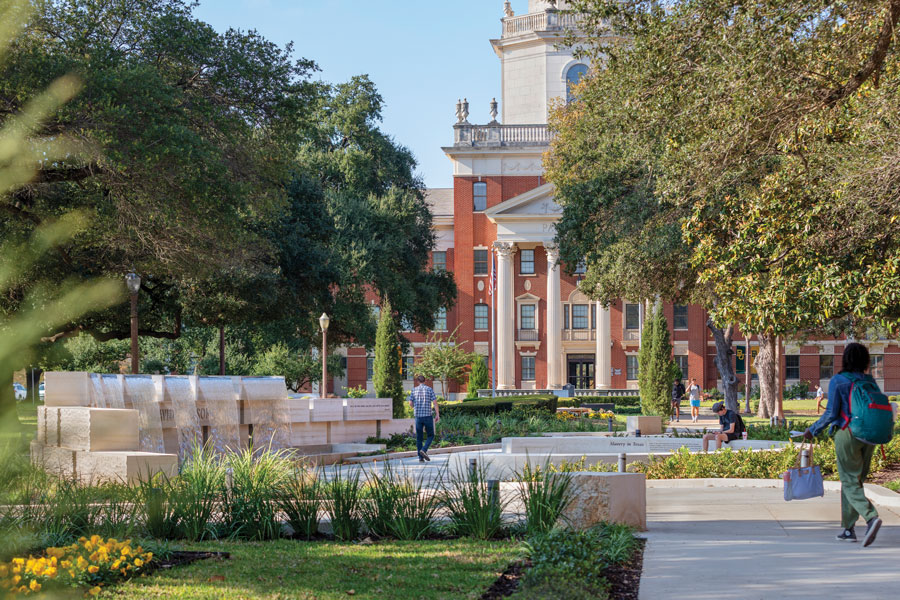
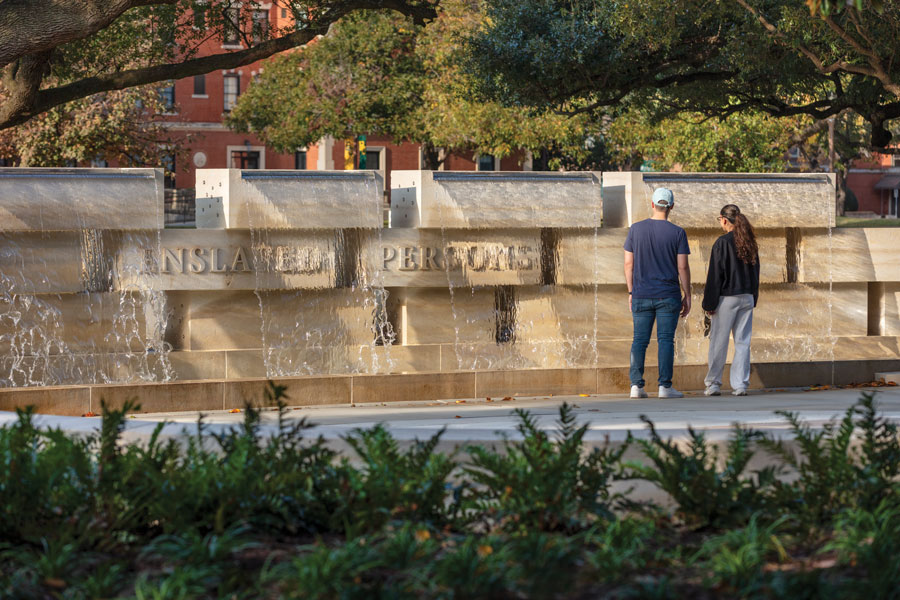
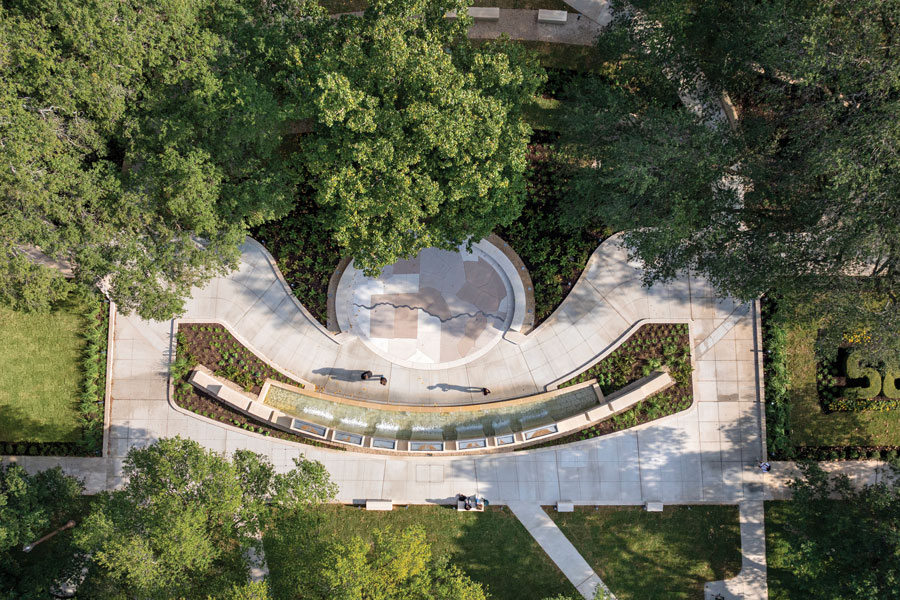
The long-awaited dedication of the Memorial to Enslaved Persons was held on Nov. 7, 2025, on Founders Mall. The Memorial honors the enslaved persons who were instrumental in constructing the original campus where Baylor University began its journey in Independence, Texas.
In 2020, the Commission on Historic Campus Representations was charged with examining Baylor’s markers of historical representations across campus, acknowledging the University’s historical connections to slavery and the Confederacy. The Commission, made up of individuals from Baylor’s student body, faculty, staff, alumni and regents, submitted a report offering guidance for telling a more complete story of the University’s history.
“Our goal at the outset of this process was not to erase Baylor’s history, but rather to tell the University’s complete story by taking an additive approach as we shine light on the past,” explained Mark Rountree, B.B.A. ’86, M.T.A. ’87, former chair of the Board of Regents. “Some of the facts uncovered about the University’s history have indeed been painful, but it is important that we move forward together as the Baylor Family through an intentional process of reckoning, repentance, reconciliation and redemption.”
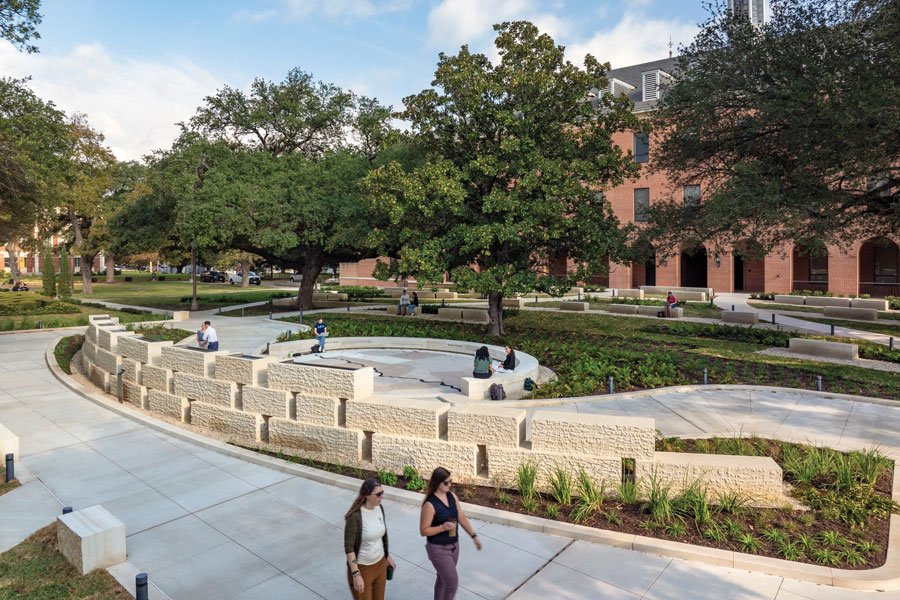
The Memorial was designed and constructed in partnership with renowned architectural firm Sasaki. It features blocks of limestone, the primary material used for Baylor’s original campus in Independence. The Memorial also features three distinct but connected parts to guide the Baylor Family and other visitors in learning, understanding and reflecting on the University’s history.
The outer ring, formed with stacked limestone, leaves 33 intentional voids — representing the 33 individuals enslaved by Judge R.E.B. Baylor in 1860 — and includes a cascading water feature.
The smaller, inner ring features a ground-level map of East Central Texas — home to Independence and Waco — with the shaded areas on the map depicting the enslaved population density circa 1860.
Foundational scriptures are etched in the limestone and are intended to remind visitors of the freedom all men and women have in Christ.
The amphitheater-style Resonance Garden between Draper Hall and the Memorial will allow students and other visitors to reflect, gather and experience community on Founders Mall.
“We believe that by forthrightly and fully addressing Baylor’s history,” Baylor President Linda A. Livingstone, Ph.D., said, “our continued journey of redemption and reconciliation will lead to a season of renewal and new beginnings on our campus as we take measures to address all historical aspects of the Baylor story and celebrate the value of all members of the Baylor Family in fulfillment of our Christian mission and in keeping with our Christian witness.”