

Baylor Professor Pioneers Battery Research
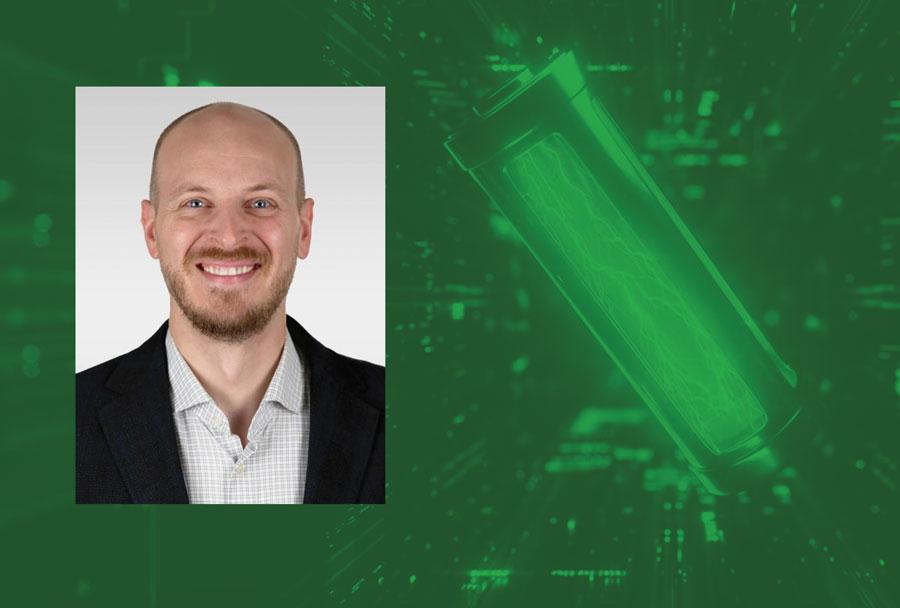
Jonathan M. Larson, Ph.D., assistant professor of chemistry and biochemistry, combines his passion, expertise and experience to forge new techniques in the science world. With an educational background in physics and mathematics and a decade of work in the chemistry and materials science fields, Larson works to combine techniques from these diverse areas to develop more efficient, safer batteries.
“Some of the most interesting problems from a basic science perspective, like batteries, reside in the blurred boundaries between disciplines. Rather than isolating different fields of study or putting them in competition with each other, we should acknowledge their individual strengths and weaknesses and join together in efforts, as the sum of our parts is better than those separated,” he said.
His blend of experience and knowledge allows him to approach research from an angle that combines methods from each of his fields.
Larson’s research demonstrates a new method of battery research, called infrared nanospectroscopy. This approach is used to characterize battery interfaces at the nanoscale without destroying the battery itself. In other words, this approach allows researchers to observe batteries on a small scale — precisely one one-billionth of a meter — without harming the battery in any way. Larson has been at the forefront of developing this groundbreaking technique, called infrared nanospectroscopy (nano-FTIR).
At this year’s Volta Foundation’s Battery Forum, Larson shared how his research could enable further developments in the battery industry. Larson’s work is a testament to the interdisciplinary learning and research that happens at the University, the capabilities of his laboratory at Baylor and the potential to bring real-world impact upon implementation.