

Balancing Mission with Growth — A Baylor Tradition
A look at the University’s commitments to its founding faith, a caring community for all students and the pursuit of knowledge grounded in God’s truth
Throughout its history, Baylor University has been firmly grounded in its mission to serve the world by educating men and women for worldwide leadership and service by integrating academic excellence and Christian commitment within a caring community.
This mission is one that, from the beginning, was built for growth. Serving the needs of the world and preparing each new generation for the challenges and opportunities ahead requires adaptability and innovation. Concurrently, serving Christ requires a prayerful commitment to the unchanging truths of God’s sovereignty and redemptive love.
In Fall 1969, Baylor President Abner V. McCall, J.D. ’38, addressed these historic commitments in a speech at a special convocation in Waco Hall. His words signaled the beginning of the observance of Baylor’s 125th year. The title of his speech — and the overarching theme — was “Change within the Unchanging.”
McCall explored the invaluable service that Baylor, like its peers in faith-based education, provides to society through its distinctive approach to higher learning.
“This university is founded on the belief that only the truth proclaimed by our Lord gives real freedom and that this truth is unchanging,” said McCall, who served as Baylor’s president from 1961-81. “An educational program that emphasizes this truth we believe is ever modern and ever relevant to the life of the student in the University and outside the University in the future.”
A Broad Plan
McCall’s speech can be seen as an extension of the animating idea behind Baylor University’s creation in the 1840s, when it was chartered by the Republic of Texas.
That idea took shape when the Texas Baptist Education Society of the Union Baptist Association organized and, in the words of James Huckins, one of Baylor’s co-founders, established a goal of founding “a Baptist university in Texas upon a plan so broad that the requirements of existing conditions would be fully met and that would be susceptible of enlargement and development to meet the demands of all ages to come.”
Baptist historian and scholar Alan Lefever, B.A. ’84, Ph.D., director of the Texas Baptist Historical Collection, noted that understanding Baylor’s past is important to understanding what Baylor is today. “The first Baptist association in Texas, the Union Baptist Association, saw that one of the most pressing needs of the young Republic of Texas was education. They realized that if the republic was to survive, education would be a key component, and they felt compelled to contribute to this endeavor in founding Baylor,” he said.
Those strong Baptist roots and that broad plan remain the foundation for Baylor’s growth as it continues to adapt to present circumstances — welcoming students and faculty from all walks of life and a variety of denominational and non-denominational faiths — without deviating from its long-held core values. Indeed, Baylor has grown in remarkable ways over the decades while remaining true to its founding mission of preparing men and women to be service-driven leaders in their professions and communities.
When Baylor President Linda A. Livingstone, Ph.D., spoke to the Baptist World Alliance’s Baptist World Congress last summer, she described how faith and spiritual growth play central roles in Baylor’s academic enterprise. As one example of this commitment, she pointed to the recent expansion of Baylor’s official motto, first established in 1851, to Pro Ecclesia, Pro Texana, Pro Mundo (For the Church, For Texas, For the World) in recognition of the University’s increasingly global reach.
In addition, Livingstone noted soon after that Baylor launched a new strategic plan, Baylor in Deeds, that is grounded in Matthew 5:14-16. “This scripture has become the core of Baylor’s purpose — to shine the light of Christ,” she said. “It speaks to who we are as a Christian university. We are called to be a light ‘of the world,’ not just in Waco and not just in Texas.”
Uniquely Positioned
Today, Baylor University occupies a distinct place in American higher education.
The University is proud to be both the largest private university in Texas and the oldest continuously operating university in the Lone Star State. More broadly, as the largest Baptist university in the world, Baylor is the only university in the nation with an active Protestant identity to have achieved Research 1 designation by the Carnegie Classification of Institutions of Higher Education. The Protestant ties of several other R1 universities are now more a part of their institutional heritage than their current life.
Baylor’s particular standing within these two spheres of influence — within Texas and across the country; within a faith-based environment and the highest levels of academia — illustrates the University’s uniqueness.
On one hand, Baylor enjoys a strong, longstanding partnership with the Baptist General Convention of Texas (BGCT), which provides support to several other educational partners, some with more narrow missions than Baylor and at a smaller scope and scale. Reflecting this mutually beneficial relationship, Baylor recently donated a plot of land on its campus to the BGCT, which is now building a Baptist Student Ministry center scheduled for completion in Fall 2026.
While some Baptist colleges and universities may be different, Baylor intentionally pursues a campus filled with Christ’s presence and a robust culture of academic excellence, transformational research and meaningful service.
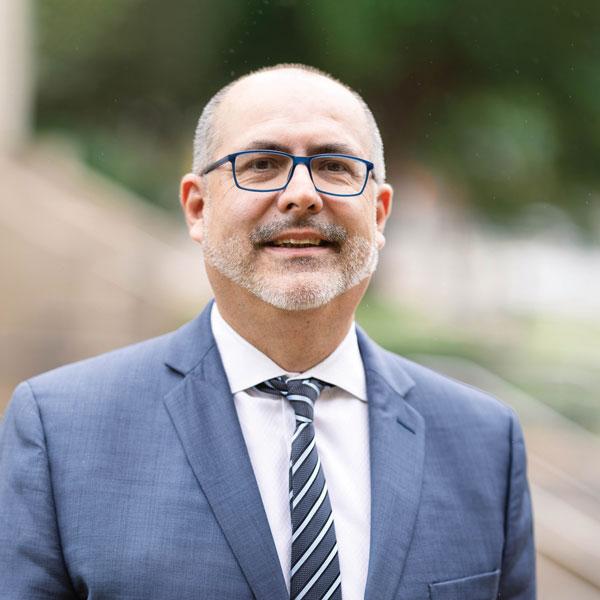
“Each of the schools that relate to us has something unique to offer in the area of education. Baylor University is no exception,” said Julio Guarneri, Ph.D., executive director of the BGCT. “Baylor takes its place as an R1 Christian university that combines the best of research and academic rigor with the heritage of the Christian faith rooted in the Baptist tradition. In a broader sense, as a premier Baptist educational institution, Baylor reaches beyond the BGCT to other Baptists in Texas, in North America and around the world.”
In some respects, Baylor is more similar to such institutions as the University of Notre Dame, BYU and other R1, faith-based universities across the nation than its neighbors in Texas. Although the members of this group of national universities differ from one another in their faith commitments, they also stand markedly apart from secular R1 institutions and thus share common interests.
Baylor’s Christian commitment also has been the critical factor in drawing some of the world’s top educators and researchers to Waco from the nation’s most prestigious universities and research labs in recent years.
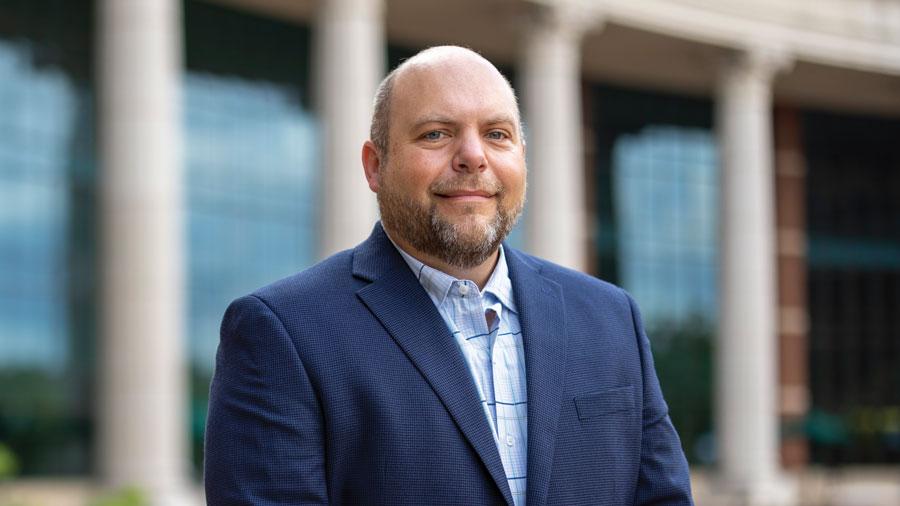
One of these outstanding scholars is Aaron T. Wright, Ph.D., who serves on Baylor’s faculty as the James R. Schofield Endowed Chair in Biomedical Sciences. “After several years working at the U.S. Department of Energy and a public university, I was keen on the possibility to more clearly express my faith in the context of my work,” he said. “Baylor’s mission to be a distinctly Christian
research university was very compelling. After interviewing, I more clearly saw the great opportunity to work in an environment where strong research and my Christian faith would intersect.”
One of the primary commitments of Baylor in Deeds is broadening interdisciplinary research and impact. “It is crucial that Baylor be recognized as a global expert on issues at the intersection of Christianity and society,” the strategic plan states. “As Christians, we are uniquely called to love God and neighbor, to be faithful and wise stewards of God’s creation, to care for the sick and wounded, to feed the hungry and to stand up for and attend to the needs of ‘the least of these.’ In doing so, Baylor has an opportunity to participate in God’s redemptive work in the world.”
This work takes many forms. Karen Melton, Ph.D., who serves as associate professor of child and family studies, is guided by her faith as she pursues research into healthy child and adolescent development. “My research begins with a core Christian conviction: that every person is made in the image of God and is deeply beloved,” Melton said. “That belief in human dignity is not just theological — it shapes how I see people, how I conduct research, and how I design programs that help students, families, and communities flourish. My faith gives me a lens of love, humility and hope. I believe we were created for relationships, and so I study how structured experiences — like camps, student programs, family activities and faith-based initiatives — can cultivate faith and character and strengthen connection.”
“Working at a Christian university has given me space to grow in both my scholarship and my spiritual life. Integrating faith into my work doesn't just change what I study; it changes how I study. My faith instills in me the humility to know I don't have all the answers, and the courage to keep asking meaningful questions anyway.”
One theme that runs through Baylor’s commitment to serve Christ as an institution of higher education is that loving others means meeting people where they live and honoring their individuality. Granted, the world that God created is a place of differing backgrounds and perspectives. However, within this mosaic of God’s creation exists a common ground of compassion.
“We are bound together not by scriptural interpretation, but by Christ and by His spirit,” said Malcolm Foley, Ph.D. ’21, who serves as special advisor to the president for campus engagement at Baylor. “So then, even with our differing interpretations, our love for one another and our willingness to work out such differences indicate to the world that Christ is real, living and active in the world. How can we live in harmony? By acting as though our faith is true and treating every human being we meet as an eternal being created in the image of God, invited into eternal life and thus worthy of love, of dignity and of care.”
Meeting Today’s Challenges with Innovation
Serving evolving student populations comes with its challenges. Today’s college students, including Baylor Bears, are in many ways quite different from their predecessors in the 1990s or the 1970s. Perhaps most prominent, within the context of Baylor’s Baptist heritage and Christian mission, are changes in denominational affiliation.
A Pew Research Center study published in February 2025 illustrates this change on a national scale. The share of Protestants who identify as non-denominational doubled between 2007 and 2024. During this same period, the number of Protestants who identify as Baptist declined by more than 5%.
These numbers are born out in the ways Baylor students identify their affiliation as Baptists. According to information from Baylor’s Office of Institutional Research, Baptist-identifying students have declined from 26.5% of Baylor’s student body in 2018 to 17.3% in 2024. In that same time frame, the number of students self-identifying as non-denominational has increased from 8.5% to 20.2%.
Several other factors likely contribute to the reported denominational changes in Baylor’s student population. Barry Hankins, B.A. ’83, M.A. ’83, Ph.D., a professor of history and a resident scholar of religion and American culture in Baylor’s Institute for Studies of Religion, believes Baylor’s standing as a preeminent research university is one such factor.
“We have a bigger pool of students coming from places that were never dominated by Baptists,” Hankins said. “Baylor is much more national — it’s seeking high-ranking students, and it has the added value of being a Christian university.”
Nevertheless, Hankins said, students’ religious faith remains important to them. “It’s not that Baylor students are less religious than they used to be,” he said. “It’s just that when they’re asked to explain how they’re religious, being Baptist is not at the top of that list anymore.”
Since 2018, a group of Baylor faculty have been conducting the Faith and Character Survey annually among Baylor’s incoming freshman, seniors and alumni. One aspect of faith formation, the study consistently finds, is that involvement in campus organizations, interactions with Christian faculty and relationships with friends strengthened faith and character formation. Conversely, students reported the traditional corporate chapel experience required by Baylor did not. In response, Baylor restructured chapel and now offers more than 60 types of chapel — some faculty-led in specific academic disciplines, others built around residential life, ministry, prayer, community interest and more. In a recent survey, more than 89% of students enrolled in chapel indicated it contributed positively to their spiritual formation.
Other societal factors that impact student learning also require innovation. The College of Arts & Sciences has taken a unique approach to the development of new and a reinvention of previous core curriculum courses to actively engage students in class.
“We recognize the role of the humanities in cultivating skills related to critical thinking, ethical judgement and interpersonal communications,” Kim Kellison, Ph.D., associate dean in the College of Arts & Sciences, said. “Many students come from high schools lacking the interpersonal skills to navigate conversations with people who are different from them in background or beliefs. Whether it stems from social media or a growing use of technology in the classroom that prioritizes a right or wrong answer, we have an exciting opportunity to help Baylor students engage in respectful dialogue about their thoughts and beliefs even when it is uncomfortable. That
is the power of Baylor’s core curriculum —
to develop well-rounded leaders equipped for their calling who can think and communicate.”
Although Baylor has chosen a challenging path in becoming an R1 institution while remaining rooted in its Christian mission — a path from which many other universities have wandered into secularism over the years — the University pursues this calling with a commitment to meeting the needs of its students, modeling civil discourse to develop citizens for the future and being the hands and feet of Christ in assisting communities around the world through research and service. It is a commitment that resonates with the Baylor Family who have come alongside Baylor in increasing numbers to make gifts to the University’s endowment for student scholarships, faculty chairs and other strategic priorities.
While pursuing their studies at Baylor, students can experience a wide array of programs that are oriented toward character formation, leadership development, spiritual growth and holistic wellbeing. Sharra Hynes, Ph.D., vice president for student life, sees Baylor’s Christian mission woven throughout the student experience — especially in how students approach leadership.
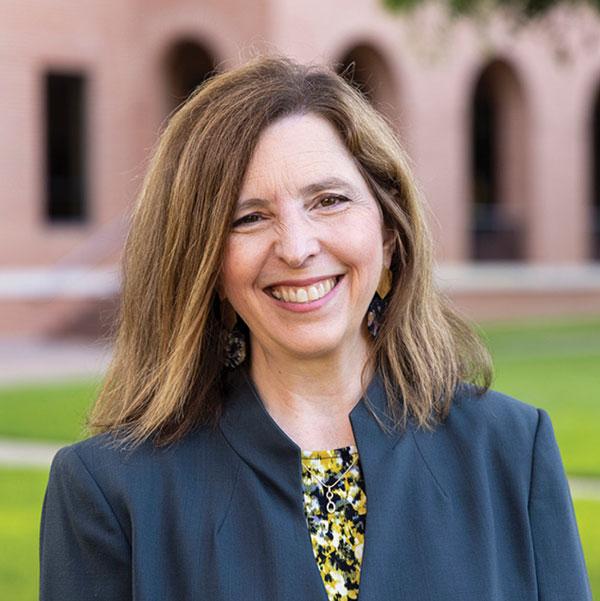
“Students are deeply drawn to experiences that allow them to live out their faith in tangible and transformative ways. This is especially evident in the way they embrace leadership — not for personal recognition or advancement but as a calling to serve others,” she said. “Whether they’re leading a student organization, mentoring a peer or serving the local Waco community, Baylor students lead with humility and purpose.”
Change within the unchanging; it is a path Baylor continues to pursue as we prepare tomorrow’s Christian leaders with the knowledge and character to impact the world in extraordinary ways.