

How America Views God
The Baylor Religion Survey contains 29 questions about God's character and behavior. After analyzing these responses, two distinct dimensions of belief in God became clear.
These two dimensions dealt with God's level of "engagement" - the extent to which individuals believe that God is directly involved in worldly and personal affairs; and God's level of "anger" - the extent to which individuals believe that God is angered by human sins and tends towards punishing, severe, and wrathful characteristics.
From these dimensions, the population was divided into four types of believers who maintain different views of who God is and what God does in the world: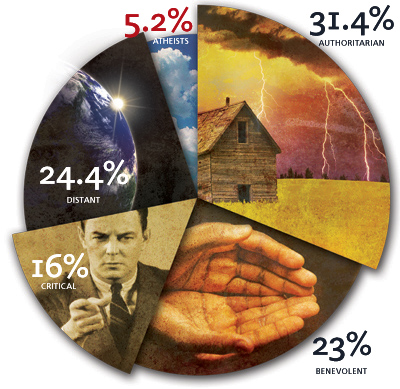
Authoritarian God: Individuals who believe in the Authoritarian God tend to think that God is highly involved in their daily lives and world affairs. They tend to believe that God helps them in their decision-making and is also responsible for global events such as economic upturns or tsunamis. They also tend to feel that God is quite angry and is capable of meting out punishment to those who are unfaithful or ungodly.
Benevolent God: Like believers in the Authoritarian God, believers in a Benevolent God tend to think that God is very active in our daily lives. But these individuals are less likely to believe that God is angry and acts in wrathful ways. Instead, the Benevolent God is mainly a force of positive influence in the world and is less willing to condemn or punish individuals.
Critical God: Believers in a Critical God feel that God really does not interact with the world. Nevertheless, God still observes the world and views the current state of the world unfavorably. These individuals feel that God's displeasure will be felt in another life and that divine justice may not be of this world.
Distant God: Believers in a Distant God think that God is not active in the world and not especially angry either. These individuals tend towards thinking about God as a cosmic force which set the laws of nature in motion. As such, God does not "do" things in the world and does not hold clear opinions about our activities or world events.
Atheists: Atheists are certain that God does not exist. Nevertheless, atheists may still hold very strong perspectives concerning the morality of human behavior and ideals of social order but have no place for the supernatural in their larger worldview.